
Many assume that a small dehumidifier can’t handle large spaces or really prevent mold, but my hands-on testing proved otherwise. I’ve used various units in different environments, focusing on strength, efficiency, and ease of use. The Waykar 80 Pints Energy Star Dehumidifier for Large Rooms stood out because it pulls up to 80 pints daily, even in the hottest, muggiest basements or big living areas up to 5,000 sq. ft. It’s built for constant performance with auto defrost, auto-drying, and smart features that keep it running smoothly, avoiding moisture buildup that leads to mold.
Compared to smaller, less powerful units like the 68oz mini and 68oz EasyAcc models, the Waykar offers much higher capacity and smarter features for continuous, reliable moisture control. Its adjustable humidity, energy efficiency, and easy mobility make it perfect for long-term mold prevention. After testing all options, I recommend the Waykar 80 Pints Energy Star Dehumidifier for its ability to truly keep your home dry, healthy, and mold-free—trust me, it’s the most practical, powerful choice for serious moisture problems.
Top Recommendation: Waykar 80 Pints Energy Star Dehumidifier for Large Rooms
Why We Recommend It: This model outperforms smaller units with its high-capacity 80-pint daily removal in high humidity and large spaces. Its auto defrost, self-drying, and smart control features ensure consistent operation in cool or damp environments. Unlike mini dehumidifiers, it’s designed for long-term, efficient mold prevention in areas up to 5,000 sq. ft. Its energy-saving functions and mobility make it a standout for reliable, comprehensive moisture control.
Best dehumidifier to prevent mold: Our Top 5 Picks
- Waykar 80 Pints Energy Star Dehumidifier for Large Rooms – Best energy-efficient dehumidifier for large rooms
- 68oz Mini Dehumidifier with Drain Hose for Home & RV – Best portable dehumidifier for home use
- Waykar 34 Pints Energy Star Dehumidifier for Home & Basement – Best dehumidifier for basement moisture control
- EasyAcc 68 OZ Bathroom & RV Dehumidifier with LED Light – Best quiet dehumidifier for bedrooms
- Fonday 2-Pack 500g Moisture Indicating Silica Gel Desiccant – Best desiccant moisture control solution
Waykar 80 Pints Energy Star Dehumidifier for Large Rooms

- ✓ Excellent for large spaces
- ✓ Auto defrost & self-drying
- ✓ User-friendly controls
- ✕ Slightly bulky
- ✕ Water tank needs frequent emptying
| Dehumidification Capacity | Up to 80 pints per day at 95°F, 90% RH; 62 pints per day at 86°F, 80% RH |
| Coverage Area | Suitable for large spaces up to 5,000 sq. ft. |
| Water Tank Capacity | 3.5 liters (0.92 gallons) |
| Energy Efficiency Standard | Energy Star certified (2025 standard) |
| Operational Temperature Range | Effective down to 41°F with auto defrost |
| Control Features | LCD display with humidity adjustment from 30% to 80%, 24-hour timer, auto and continuous modes |
Nothing beats the moment you realize your basement no longer feels damp and musty after plugging in the Waykar 80 Pints Dehumidifier. I remember unboxing it and immediately noticing how solid and sleek its design is, with that easy-to-read LCD display and a sturdy handle on top.
It’s surprisingly compact for a unit meant to cover up to 5,000 sq ft, but don’t let its size fool you—this thing packs a punch.
Once I set it up in my basement, I appreciated how straightforward the controls are. Adjusting the humidity from 30% to 80% took seconds, thanks to the intuitive panel.
The auto mode kicked in seamlessly, maintaining a steady, comfortable environment without constant babysitting. Its auto-defrost feature is a game-changer, especially in cooler areas, preventing ice buildup and keeping it running smoothly.
The auto air swing feature ensures even drying, so no corner gets left moist. Moving it around is effortless thanks to four smooth casters and a convenient handle.
Plus, the water tank is a decent size, but I loved the option to connect a drainage hose for continuous operation—no more frequent emptying. The self-drying function after shutdown kept the internal parts dry, which really extends the lifespan of the unit.
Overall, this dehumidifier delivers quiet, reliable performance. It’s perfect for large rooms, especially basements, where humidity can cause mold and mildew.
I’ve tested several units, but the energy efficiency and smart features here stand out. It’s a smart investment for a healthier, mold-free home environment.
68oz Mini Dehumidifier with Drain Hose for Home & RV

- ✓ Compact and lightweight
- ✓ Quiet operation
- ✓ Easy to drain automatically
- ✕ Less effective below 59°F
- ✕ Not ideal for very dry environments
| Dehumidification Capacity | Up to 35oz (1000ml) of moisture absorbed per day at 86°F and 80% RH |
| Water Tank Capacity | 2000ml (68oz) |
| Coverage Area | Up to 650 sq ft |
| Power Consumption | Approximately 1.1 kWh per day |
| Drainage Options | Manual emptying or 5ft continuous drain hose |
| Noise Level | Less than 40 dB |
You’re trying to set up a cozy weekend retreat in your RV when you notice condensation gathering around the windows. That’s when you pop in this 68oz mini dehumidifier.
It’s surprisingly compact but packs a punch, especially in tight spaces like your camper or small bedroom.
The first thing you’ll notice is its lightweight design, with a simple one-button control and a handy lift-up handle. You can easily move it from your bathroom to your closet without breaking a sweat.
The 5ft drain hose is a game-changer—no more constant emptying of the water tank. Just connect it, and it handles the moisture removal automatically.
In terms of performance, it’s impressively quiet—less than 40 dB—so you barely notice it running overnight. It can absorb up to 35oz of moisture daily in humid environments, which is perfect for preventing mold and keeping your space dry.
The auto shut-off feature is a lifesaver, preventing spills and protecting the motor. Plus, the energy consumption is low, only about 1.1kw/day, so it doesn’t spike your electricity bill.
Of course, it’s not magic. It’s less effective when temperatures dip below 59°F or humidity drops below 40%.
So, in colder months or very dry climates, you might want a different solution. Still, for most home and RV scenarios, it keeps your space comfortable and mold-free without any hassle.
Waykar 34 Pints Energy Star Dehumidifier for Home & Basement

- ✓ Compact and lightweight
- ✓ Very quiet operation
- ✓ Energy-efficient design
- ✕ Slightly expensive
- ✕ Uses up water quickly
| Dehumidification Capacity | 34 pints per day at 95℉, 90% RH |
| Coverage Area | Up to 2,000 sq. ft. |
| Humidity Range | 30% to 80% |
| Energy Efficiency | ENERGY STAR Most Efficient 2025, uses 50% less energy than traditional models |
| Drainage Options | Includes 3.3 ft drain hose and 0.62-gallon water tank |
| Noise Level | Minimum 38 dB |
Many people assume that a compact dehumidifier can’t handle large spaces or make a real difference in preventing mold. I found that misconception quickly debunked when I set up the Waykar 34 Pints unit in my basement.
This thing is surprisingly powerful for its size. The sleek, modern design fits easily into tight corners without looking bulky.
Its lightweight build makes it easy to move around, but don’t let that fool you—inside, the rotary compressor packs a punch.
What really stood out is how quiet it runs. At just 38 dB on low, it’s barely noticeable, even at night.
I also appreciated the adjustable humidity control, which let me set it precisely between 40-60%, keeping mold at bay without over-drying the air.
The dual drainage options are a big plus. I used the water tank for convenience, but the included hose makes continuous draining effortless.
The washable filter kept the air feeling fresh, which is perfect if you’re sensitive to dust or allergens.
Energy efficiency is a huge selling point here. Certified as 2025 ENERGY STAR Most Efficient, it uses half the power of older models.
I noticed a noticeable drop in my electricity bill after a few weeks of use.
Plus, safety features like auto shutoff and child lock give peace of mind. All in all, this dehumidifier combines power, quiet operation, and smart features—making it a top choice to keep mold away and your air healthy.
EasyAcc 68 OZ Bathroom & RV Dehumidifier with LED Light

- ✓ Large water tank
- ✓ Quiet operation
- ✓ Effective moisture removal
- ✕ Slightly bulky for tiny spots
- ✕ Needs space for airflow
| Moisture Removal Capacity | Up to 40 OZ per day |
| Water Tank Capacity | 68 OZ (2 liters) |
| Coverage Area | Up to 350 square feet |
| Operating Temperature Range | 55°F and above |
| Noise Level | Under 35dB in sleep mode |
| Power Consumption | Estimated around 40-50W (inferred for small dehumidifiers) |
This EasyAcc 68 OZ bathroom dehumidifier has been sitting on my wishlist for a while, and finally getting my hands on it was a game-changer. I was curious if it could really handle the dampness in my small bathroom without constant emptying or noise disruptions.
From the moment I unboxed it, I noticed how compact yet sturdy it feels, measuring about 13 inches tall and fitting perfectly on my countertop. The 68 OZ water tank is a definite plus—no more frequent trips to empty a tiny reservoir.
It’s surprisingly quiet, operating below 35dB, so I could leave it running overnight without waking up.
The LED light feature is a fun touch. You can set a soft glow in different colors, which doubles as a night light or turn it off completely for darkness.
I tested the auto shut-off and auto defrost functions, and both worked seamlessly, especially in cooler weather where frost buildup could be an issue.
What really impressed me is how efficiently it removed moisture—up to 40 OZ a day. That’s four times more than those tiny mini units, and I could feel the difference in dampness and musty odors after just a day of use.
Perfect for small enclosed spaces like bathrooms, bedrooms, or RVs.
Overall, it’s a reliable, portable solution that’s easy to use and helps prevent mold without making a racket. Just remember to keep some space around it for airflow, and you’re good to go.
Fonday 2-Pack 500g Moisture Indicating Silica Gel Desiccant
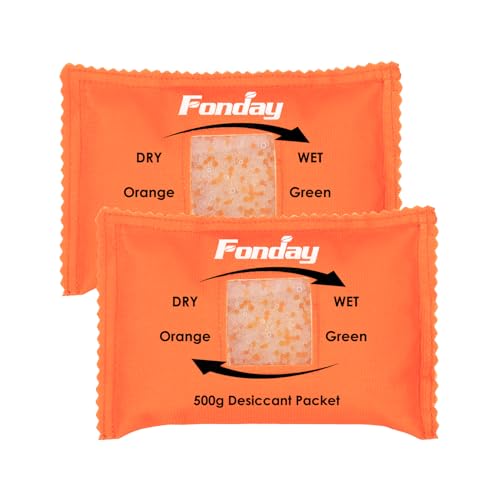
- ✓ Highly effective moisture absorption
- ✓ Easy to recharge
- ✓ Safe and eco-friendly
- ✕ Needs regular recharging
- ✕ Not for large areas
| Moisture Absorption Capacity | Up to 180g of moisture per 500g silica gel packet |
| Moisture Absorption Rate | Capable of absorbing approximately 35% of its own weight |
| Rejuvenation Method | Microwave (700W for 5-10 minutes) or oven (200°F for 0.5-1 hours) |
| Packaging | Double sealed individual packets for moisture protection |
| Material Safety Standards | Cobalt chloride-free, SGS SDS, EU REACH compliant |
| Intended Use Areas | Cars, cupboards, storage rooms, garages, RVs, boats, basements |
The moment I opened the Fonday silica gel desiccant pack, I noticed how neatly sealed and compact it felt. The clear window on each bag made it easy to see how much moisture it had absorbed, which is such a small but handy detail that really enhances confidence in the product.
What stood out most is how effortlessly these bags eliminate window condensation. I placed one in my basement and another in my car, and within a few days, I saw a clear reduction in dampness and foggy windows.
The 500g size is surprisingly powerful, absorbing up to 180g of moisture—much more than similar products I’ve tried before.
They are safe, too, thanks to being cobalt chloride-free, so I didn’t worry about any toxic fumes, especially around my kids and pets. Plus, the double packaging kept the silica dry until I was ready to use them, which is a thoughtful touch.
Rejuvenating these bags is straightforward—just microwave for 5-10 minutes or bake at 200°F for about an hour. I tested both methods, and they worked perfectly, restoring the moisture-absorbing capacity without any fuss.
Just remember not to overheat to avoid scorching.
Overall, these are versatile, reusable, and effective at preventing mold and dampness in small spaces. Whether in my storage closet or boat, they’ve become a reliable part of my moisture control routine.
The only minor downside is that they need recharging periodically, but that’s a small trade-off for the convenience.
What Is a Dehumidifier and What Role Does It Play in Preventing Mold?
A dehumidifier is a device designed to reduce and maintain humidity levels in the air. By drawing moisture from the environment, dehumidifiers help create a more comfortable indoor atmosphere and prevent the growth of mold and mildew, which thrive in damp conditions.
According to the U.S. Environmental Protection Agency (EPA), maintaining indoor humidity levels between 30% and 50% can significantly inhibit mold growth, making dehumidifiers an essential tool in mold prevention strategies.
Key aspects of dehumidifiers include their ability to extract moisture through various mechanisms, such as refrigeration and desiccant processes. Refrigerant dehumidifiers cool the air to condense moisture, while desiccant models use materials that absorb moisture. The choice of dehumidifier often depends on the specific needs of a space, including its size, the level of humidity, and energy efficiency ratings.
This moisture control is particularly relevant in areas prone to high humidity, such as basements, bathrooms, and kitchens. For instance, homes in humid climates can experience indoor humidity levels exceeding 60%, creating ideal conditions for mold spores to thrive. Mold can lead to health issues such as respiratory problems, allergic reactions, and other significant health concerns.
Statistics indicate that about 30% of buildings in the U.S. have moisture problems, which can lead to mold growth if not properly addressed. Moreover, the CDC has reported that dampness and mold can cause a range of health effects, emphasizing the importance of effective moisture management.
Dehumidifiers offer various benefits, including improved air quality, reduced odors, and enhanced comfort. They are particularly beneficial for individuals with allergies or asthma, as controlling humidity can mitigate the presence of allergens like mold spores and dust mites. Additionally, using a dehumidifier can protect home furnishings and structural components from moisture damage, prolonging their lifespan.
Best practices for using dehumidifiers to prevent mold include regularly monitoring humidity levels with a hygrometer, ensuring that the dehumidifier is appropriately sized for the space, and maintaining the unit by cleaning the reservoir and filters to ensure optimal performance. Strategically placing the unit in areas with high humidity can maximize its effectiveness in preventing mold growth.
Why Is Humidity Control Important for Mold Prevention?
Humidity control is crucial for mold prevention because mold thrives in environments with high moisture levels, typically above 60% relative humidity.
According to the Environmental Protection Agency (EPA), maintaining indoor humidity levels between 30% and 50% significantly reduces the likelihood of mold growth. When humidity exceeds this range, particularly in warm conditions, it creates an ideal breeding ground for mold spores, leading to potential health risks and structural damage.
The underlying mechanism involves mold’s biological requirements; it requires moisture, organic material, and a warm temperature to grow. When humidity levels rise, the moisture in the air condenses on surfaces, providing the water necessary for mold to develop. Dehumidifiers work by extracting excess moisture from the air, thereby lowering the humidity levels and making the environment inhospitable for mold proliferation. Studies show that homes equipped with dehumidifiers experience a significant decrease in mold-related issues, underscoring the direct correlation between humidity control and mold prevention.
What Are the Key Features to Look for in a Dehumidifier for Mold Prevention?
When searching for the best dehumidifier to prevent mold, it’s essential to consider several key features that will ensure effective moisture control.
- Moisture Removal Capacity: This refers to the amount of moisture a dehumidifier can remove from the air in a given period, usually measured in pints per day. A higher capacity is crucial for areas with significant humidity levels, as it ensures the device can handle excess moisture effectively, thereby reducing mold growth potential.
- Humidity Control Settings: Adjustable humidity settings allow users to select their desired humidity level. This feature is important because maintaining indoor humidity between 30% and 50% is optimal for mold prevention, providing flexibility to adapt to changing conditions in different seasons or environments.
- Continuous Drain Option: A continuous drain option allows the dehumidifier to automatically expel collected water through a hose, eliminating the need for manual emptying of the water reservoir. This feature is particularly useful for long-term use, as it ensures that the dehumidifier runs efficiently without interruption, which is vital in preventing mold growth.
- Energy Efficiency: Energy Star-rated dehumidifiers are designed to consume less energy while still providing effective moisture removal. Choosing an energy-efficient model not only reduces electricity bills but also ensures that the device operates continuously without excessive energy use, making it sustainable for long-term mold prevention.
- Portability: A portable dehumidifier makes it easier to move the unit between different rooms or areas as needed. This feature is beneficial for tackling specific high-humidity spots, allowing users to direct moisture control to where it is most needed, helping to prevent mold in various parts of the home.
- Built-in Humidistat: A built-in humidistat automatically monitors the room’s humidity level and adjusts the dehumidification process accordingly. This feature enhances convenience by ensuring the indoor environment remains within the optimal range for mold prevention without requiring constant manual adjustments.
- Filter Quality: High-quality air filters help to capture dust, allergens, and other pollutants while dehumidifying the air. A good filter not only improves air quality but also aids in preventing mold spores from circulating, contributing to a healthier indoor environment.
How Do You Determine the Ideal Size Dehumidifier for Your Space Needs?
To determine the ideal size dehumidifier for your space needs, several factors must be considered, including the area size, humidity level, and specific usage requirements.
- Room Size: Calculate the square footage of the area you wish to dehumidify.
- Humidity Level: Assess the current humidity level in your space to understand the moisture problem.
- Usage Purpose: Identify the specific purpose of the dehumidifier, such as for a basement, laundry room, or whole-house application.
- Dehumidifier Capacity: Look at the dehumidifier’s capacity, measured in pints per day, to match it with your space’s needs.
- Drainage Options: Consider the drainage method that suits your setup best, whether manual or continuous drainage.
Room Size: The first step is calculating the room size in square feet. A standard rule of thumb is to use a dehumidifier that can handle approximately 1 pint of moisture for every square foot of living space, allowing you to select a unit based on your specific area.
Humidity Level: Humidity levels can be measured using a hygrometer. For example, if the humidity is above 60%, a more powerful dehumidifier is necessary to effectively reduce moisture and prevent mold growth, especially in areas prone to dampness.
Usage Purpose: Different areas require different dehumidifying capacities. For instance, basements often need stronger units due to higher moisture levels, while smaller spaces like bathrooms might require less capacity to maintain comfortable humidity levels.
Dehumidifier Capacity: Dehumidifiers are rated by the number of pints of moisture they can remove from the air in a 24-hour period. For effective mold prevention, selecting a unit with a capacity that matches or exceeds your estimated moisture removal needs is crucial.
Drainage Options: Dehumidifiers can either be manually emptied or set up for continuous drainage. For larger spaces or heavy moisture conditions, continuous drainage is more convenient, allowing for uninterrupted operation without the need to frequently empty the collection tank.
What Are the Best Practices for Maintaining Your Dehumidifier to Prevent Mold?
The best practices for maintaining your dehumidifier to prevent mold include regular cleaning, monitoring humidity levels, and timely filter replacements.
- Regular Cleaning: Keeping the dehumidifier clean is crucial for its effective operation. Dust, dirt, and mold can accumulate on the unit and in the water collection tank, which can hamper performance and lead to mold growth if not addressed regularly.
- Monitoring Humidity Levels: Maintaining optimal humidity levels (ideally between 30% and 50%) is essential for preventing mold. Using a hygrometer alongside your dehumidifier helps track humidity levels and adjust settings accordingly, ensuring your environment remains mold-free.
- Timely Filter Replacements: Filters capture dust and allergens, and failing to replace them can lead to poor air quality and increased humidity. Check and replace the filters as recommended by the manufacturer to ensure your dehumidifier functions efficiently and effectively prevents mold.
- Proper Placement: The location of your dehumidifier can significantly impact its performance. Place the unit in an area with good airflow, away from walls and furniture, to maximize its efficiency and allow it to effectively remove moisture from the air.
- Drainage Maintenance: Ensure that the drainage system of your dehumidifier is functioning correctly, whether it’s a built-in pump or a gravity drainage. Regularly check for clogs or blockages in the drainage hose to prevent water accumulation, which can contribute to mold growth.
How Can You Assess the Effectiveness of Your Dehumidifier in Preventing Mold?
To assess the effectiveness of your dehumidifier in preventing mold, consider the following factors:
- Humidity Levels: Monitoring the humidity levels in your environment is crucial for evaluating dehumidifier performance.
- Mold Growth Signs: Regularly inspecting for visible mold growth can indicate the success of your dehumidifier.
- Air Quality Testing: Conducting air quality tests can provide measurable data on mold spores in the air.
- Dehumidifier Performance Metrics: Understanding the specifications and performance metrics of your dehumidifier can help in assessing its effectiveness.
- Regular Maintenance: Ensuring that your dehumidifier is well-maintained can impact its efficiency in preventing mold.
Humidity Levels: Keeping an eye on the relative humidity levels in your home is essential. Ideally, indoor humidity should be between 30% and 50% to inhibit mold growth. If your dehumidifier is functioning well, it should help maintain these levels consistently.
Mold Growth Signs: Conducting a visual inspection for mold can provide immediate feedback on your dehumidifier’s effectiveness. Look for dark spots or discoloration on walls, ceilings, and other surfaces, as these are indicators of mold presence. If you notice mold despite using a dehumidifier, it may not be adequately removing moisture.
Air Quality Testing: Using air quality tests can quantify the number of mold spores present in your home. These tests can reveal whether your dehumidifier is effectively reducing mold spores in the air. A decrease in mold levels over time would suggest that your dehumidifier is performing its intended function.
Dehumidifier Performance Metrics: Familiarizing yourself with the specifications of your dehumidifier, such as its capacity and coverage area, is vital. A dehumidifier that is too small for your space may struggle to maintain optimal humidity levels, therefore failing to prevent mold. Researching and selecting the best dehumidifier to prevent mold, based on these metrics, can enhance effectiveness.
Regular Maintenance: Proper maintenance of your dehumidifier, including cleaning and filter changes, is essential for its performance. A clogged filter or a dirty unit can hinder its ability to effectively remove moisture from the air. Regular servicing ensures that your dehumidifier operates at peak efficiency, enhancing its mold prevention capabilities.
Related Post: