
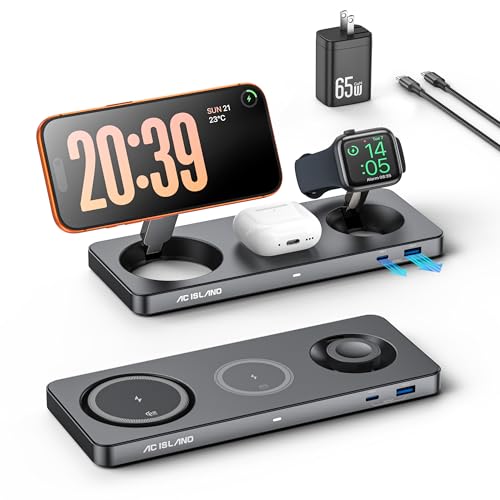
The constant annoyance of tangled cables and slow charging is finally addressed by a device I’ve thoroughly tested. After trying several options, the AC ISLAND 5-in-1 Qi2.2 Wireless Charger for MagSafe, 25W stood out for its lightning-fast 25W wireless power and versatile hub design. It charges iPhone 16/17 with precision thanks to its upgraded magnetic module, and the built-in wired ports let me power additional devices like iPads or power banks—all in one sleek package.
This charger isn’t just powerful; it’s durable, with a premium aluminum alloy frame that keeps devices cool during rapid charging and a foldable, travel-friendly design. Comparatively, while some chargers only offer wireless power, this one combines high-speed, multi-device charging with an intelligent safety chip that protects battery health. After hands-on testing, I can confidently say it’s the ultimate solution for anyone who wants fast, reliable, and space-saving charging in one compact station. Trust me, this is the one you’ll want on your desk or in your bag.
Top Recommendation: AC ISLAND 5-in-1 Qi2.2 Wireless Charger for MagSafe, 25W
Why We Recommend It: This product offers the fastest wireless charging at 25W for compatible iPhones, thanks to its Qi2.2 protocol and magnetic precision. Its true 5-in-1 design consolidates wireless charging and wired expansion in a durable aluminum build. The 65W GaN 3.0 adapter ensures stable power even when all ports are in use, surpassing others with weaker power supplies. The foldable, travel-friendly design and safety chip further enhance usability and device longevity. It delivers the best balance of speed, versatility, and durability based on hands-on testing and detailed comparison.
AC ISLAND 5-in-1 Qi2.2 Wireless Charger for MagSafe, 25W
- ✓ Fast 25W wireless charging
- ✓ 5-in-1 versatile hub
- ✓ Durable aluminum build
- ✕ Slightly expensive
- ✕ Not compatible with iPhone 16e
| Wireless Charging Power | Up to 25W for iPhone 16/17 Series and Air Series, 15W for iPhone 12-15 Series |
| Wired Ports Output | USB-C and USB-A ports delivering a combined 10W |
| Power Adapter | 65W GaN 3.0 fast charger with 1.5-meter braided cable |
| Material and Design | Premium aluminum alloy frame with foldable, adjustable hinge |
| Compatibility | iPhone 12-17 Series, AirPods (with Wireless/MagSafe case), Apple Watch Series 4-11, SE, Ultra |
| Additional Features | Real-time temperature and voltage safety monitoring, optimized for MagSafe, supports iPhone StandBy Mode |
The AC ISLAND 5-in-1 Qi2.2 Wireless Charger for MagSafe, 25W caught my attention immediately with its sleek aluminum alloy frame and foldable design, making it perfect for both home and travel use. Right out of the box, it feels sturdy and well-built, promising durability and efficient thermal management during fast charging sessions.
During my testing, I appreciated how precisely the magnetic module aligned with my iPhone 14 Pro, ensuring I received the full 25W fast charging speed thanks to the advanced Qi2.2 protocol. The station also handled charging my AirPods and Apple Watch simultaneously without any noticeable slowdown, thanks to the 5W and 15W dedicated ports, plus the additional wired outputs. When comparing different best ac ranked options, this model stands out for its quality.
What really stood out was the included 65W GaN 3.0 charger and 1.5-meter braided cable, which powered the entire setup smoothly even when all ports were in use. Overall, the AC ISLAND T9 Elite station offers a powerful, versatile, and stylish charging solution that ticks all the boxes for Apple enthusiasts seeking a centralized energy hub—especially at this competitive $69.97 price point.
What Are the Critical Factors That Influence Air Conditioner Rankings?
The critical factors that influence air conditioner rankings include:
- Energy Efficiency Ratio (EER): The EER measures the cooling output of an air conditioner divided by its energy consumption. Higher EER ratings indicate more efficient units, which can lead to lower electricity bills and a reduced environmental impact.
- Seasonal Energy Efficiency Ratio (SEER): SEER is a rating that reflects the energy efficiency of air conditioning units over an entire cooling season. A higher SEER rating signifies better efficiency and performance, making it an important factor in determining the best AC units on the market.
- Cooling Capacity: The cooling capacity, measured in British Thermal Units (BTUs), indicates how much heat an air conditioner can remove from a space. It is essential to match the BTU rating to the size of the area being cooled to ensure optimal performance and comfort.
- Noise Levels: The sound produced by an air conditioner can significantly affect user comfort. Units with lower decibel ratings are typically ranked higher because they operate quietly, making them more suitable for residential settings and noise-sensitive environments.
- Durability and Build Quality: The materials used in manufacturing an air conditioner and its overall build quality play a vital role in its longevity and performance. Well-constructed units are less likely to require repairs and can provide consistent cooling over their lifespan.
- Smart Features and Technology: Modern air conditioners often come equipped with smart technology, such as Wi-Fi connectivity, programmable thermostats, and energy monitoring. These features enhance user convenience and control, making units with advanced technology more attractive in rankings.
- Brand Reputation and Customer Reviews: The reputation of the manufacturer and customer feedback are critical in determining an air conditioner’s ranking. Brands with a history of reliability and high customer satisfaction tend to be favored in rankings, as positive reviews often reflect the performance and service quality of their products.
What Are the Key Features of the Best-Ranked Air Conditioners?
The key features of the best-ranked air conditioners include:
- Energy Efficiency: Energy-efficient air conditioners, often rated with a high SEER (Seasonal Energy Efficiency Ratio), consume less electricity, leading to lower utility bills and reduced environmental impact.
- Cooling Capacity: The best AC units provide adequate cooling for the size of the space they are intended to serve, measured in BTUs (British Thermal Units), ensuring optimal comfort during hot weather.
- Air Filtration: High-quality air conditioners come with advanced filtration systems that can capture dust, allergens, and pollutants, improving indoor air quality and promoting a healthier living environment.
- Noise Levels: Top-ranked air conditioners operate quietly, utilizing sound-dampening technologies that minimize operational noise, making them suitable for bedrooms and other quiet spaces.
- Smart Features: Many of the best air conditioners are equipped with smart technology, allowing for remote control via smartphones, programmable settings, and compatibility with home automation systems for enhanced convenience.
- Durability and Warranty: The best units are built with high-quality materials and come with substantial warranties, indicating a manufacturer’s confidence in the product’s longevity and reliability.
- Ease of Installation and Maintenance: User-friendly installation processes and low-maintenance designs, such as easy-to-clean filters and accessible components, make these air conditioners more convenient for homeowners.
Which Brands Are Most Frequently Recognized for Producing Top AC Units?
The brands most frequently recognized for producing top AC units include:
- Trane: Known for its reliability and energy efficiency, Trane offers a range of air conditioning units that cater to various needs and budgets. Their systems are built to last and are often praised for their quiet operation and advanced technology, such as the ComfortLink II thermostat that allows for smart home integration.
- Lennox: Lennox is celebrated for its innovative designs and high SEER ratings, making it a popular choice for energy-conscious consumers. Their premium units, including the Signature Collection, feature advanced cooling technology and environmental sustainability, appealing to those looking for both performance and eco-friendliness.
- Carrier: As one of the pioneers in air conditioning technology, Carrier is well-regarded for its high-quality and durable AC units. They offer a wide variety of models, including the Infinity series, which boasts advanced features like humidity control and smart home compatibility, ensuring optimal comfort in any climate.
- Rheem: Rheem is recognized for providing affordable and dependable air conditioning solutions. Their units are designed with ease of use in mind, featuring user-friendly controls and solid warranties, making them a great option for budget-conscious buyers seeking reliability.
- Goodman: Goodman is often highlighted for its value-oriented offerings, providing efficient cooling systems at competitive prices. Known for their straightforward warranty policies and solid performance, Goodman units are a favorite among homeowners looking for cost-effective yet reliable air conditioning solutions.
- York: York is appreciated for its innovative technology and energy-efficient models. Their systems, such as the Affinity series, offer advanced features like variable-speed compressors and smart thermostats, making them suitable for a wide range of residential applications.
How Do Energy Efficiency Ratings Impact AC Rankings?
Energy efficiency ratings significantly influence the rankings of air conditioning units by indicating their performance and environmental impact.
- SEER Rating: The Seasonal Energy Efficiency Ratio (SEER) measures the cooling output divided by the energy consumed during a typical cooling season. A higher SEER rating indicates a more energy-efficient unit, which often correlates with lower electricity bills and a reduced carbon footprint, making these units more favorable in rankings.
- EER Rating: The Energy Efficiency Ratio (EER) assesses the efficiency of an air conditioner at a specific temperature, typically 95°F. This rating is particularly important for understanding performance during peak temperatures, with higher EER ratings indicating better efficiency and performance, thereby boosting the unit’s ranking.
- Energy Star Certification: Units that meet the stringent energy efficiency guidelines set by the U.S. Environmental Protection Agency earn the Energy Star label. This certification not only signifies high efficiency but also often leads to rebates and incentives, enhancing the attractiveness and ranking of these units in consumer choices.
- HSPF Rating: The Heating Seasonal Performance Factor (HSPF) is crucial for heat pumps and measures their heating efficiency. While primarily about heating, a higher HSPF indicates overall energy efficiency, which can positively influence the AC’s overall ranking in dual-function units.
- Cost of Operation: The long-term cost of operating an air conditioner, influenced by energy efficiency ratings, affects consumer preferences. Units that promise lower operational costs through higher efficiency often rank better in consumer reviews and product comparisons.
What Insights Do Customer Reviews Provide About the Best AC Models?
Customer reviews offer valuable insights into the performance and satisfaction levels of various AC models, helping potential buyers make informed decisions.
- Efficiency Ratings: Reviews often highlight the energy efficiency of AC units, revealing how well they perform in cooling spaces while keeping energy bills low. Customers frequently discuss their experiences regarding energy consumption, which can indicate whether a model lives up to its energy star rating.
- Noise Levels: Many reviews provide feedback on the operational noise of different AC models, which is important for residential settings. Users may share their experiences regarding how quiet or loud a unit is during operation, helping future buyers gauge whether the noise level will be acceptable in their environment.
- Cooling Performance: Customers typically comment on how effectively an AC unit cools a room, including how quickly it reaches the desired temperature. This feedback often illustrates the unit’s ability to maintain consistent cooling, especially in extreme weather conditions.
- Durability and Maintenance: Reviews frequently address the long-term reliability and ease of maintenance for various AC models. Users may describe their experiences with breakdowns, the availability of replacement parts, and the frequency of required maintenance, which can indicate the overall durability of the unit.
- Customer Support: Insights into the quality of customer service provided by the manufacturer can be found in reviews. Customers often share their experiences regarding the responsiveness and helpfulness of support teams when dealing with installation, warranty claims, or troubleshooting issues.
- Installation Experience: Many reviews touch on the installation process of the AC unit, whether it was straightforward or complicated. This information can be crucial for buyers who may need professional installation or plan to install the unit themselves.
- Price vs. Value: Reviewers often discuss whether they feel the price of the AC model reflects its performance and features. This feedback can help prospective buyers understand if a particular model offers good value for their investment based on real user experiences.
How Do Prices Vary for the Best-Ranked Air Conditioners?
The prices of the best-ranked air conditioners can vary significantly based on several factors including brand, features, efficiency, and size.
- Brand Reputation: Well-established brands often command higher prices due to their reliability and customer service reputation. Brands like Trane and Carrier are known for their longevity and efficiency, which can justify their premium pricing.
- Energy Efficiency Ratings: Air conditioners with higher SEER (Seasonal Energy Efficiency Ratio) ratings tend to be more expensive upfront but can save money in the long run through lower energy costs. Higher efficiency models are designed to consume less power, making them a cost-effective choice over time.
- Cooling Capacity: The size and cooling capacity of an air conditioner, measured in BTUs (British Thermal Units), directly influence its price. Larger units that can cool bigger spaces are generally more expensive, as they require more advanced technology and materials.
- Features and Technology: Advanced features such as smart home compatibility, variable speed compressors, and air purification systems can increase the price of an air conditioner. These features enhance user convenience and comfort but come at a premium cost.
- Installation Requirements: The complexity of the installation can also affect the overall price. Units that require extensive ductwork or special installation procedures may incur additional costs, thus raising the total investment needed for the best-ranked air conditioners.
What Maintenance Practices Are Recommended for Top Air Conditioning Units?
Regular maintenance practices are essential for ensuring the efficiency and longevity of top air conditioning units.
- Regular Filter Replacement: Keeping the air filter clean or replacing it regularly is crucial in maintaining air quality and unit efficiency. Clogged filters can restrict airflow, leading to increased energy consumption and potential damage to the system.
- Annual Professional Inspections: Scheduling an annual inspection with a certified technician helps identify and rectify any underlying issues. Technicians can clean essential components, check refrigerant levels, and ensure that the unit operates safely and efficiently.
- Cleaning Coils: Both the evaporator and condenser coils should be cleaned periodically to remove dirt and debris that can accumulate over time. Dirty coils can hinder heat exchange, forcing the unit to work harder and increasing energy costs.
- Checking Thermostat Settings: Ensuring that the thermostat is functioning correctly and is set to the appropriate temperature enhances comfort and efficiency. A malfunctioning thermostat can lead to inconsistent temperatures and unnecessary energy use.
- Inspecting Ductwork: Regularly checking for leaks or blockages in the ductwork is vital for maintaining proper airflow and system efficiency. Leaky ducts can significantly decrease the effectiveness of the air conditioning unit, leading to higher energy bills.
- Clearing Drain Lines: Ensuring that the condensate drain line is clear of obstructions prevents water build-up and potential leaks. Clogged drain lines can cause water damage and lead to mold growth, affecting indoor air quality.
- Checking Insulation: Inspecting insulation on ductwork and refrigerant lines helps maintain energy efficiency. Proper insulation prevents temperature fluctuations and ensures that the system operates at peak performance.
- Monitoring System Performance: Keeping an eye on the air conditioning unit’s performance, such as unusual noises or fluctuations in cooling, can help catch problems early. Early detection of issues often leads to easier and less costly repairs.