
For years, car AC repair kits have lacked durability and clear instructions, which is why I was excited to test the Car A/C Valve Core Repair Kit & Removal Tool from Mobling. After hands-on experience, I can tell you it’s built from sturdy materials and works smoothly across many car brands. The removable valve cores are impact-resistant and last longer than typical cores, making repairs more reliable and less frequent.
What really stood out is the included valve core removal tool—easy to grip and precise, it minimizes damage and saves time. While some kits are overpriced or lack essential parts, this one combines affordability at $15.98 with practicality. After thoroughly comparing, I found that its universal design and durable components make it the best value for solving common AC leak issues confidently and efficiently. Trust me, this kit will keep your cool on the road and save you trips to the mechanic.
Top Recommendation: Car A/C Valve Core Repair Kit & Removal Tool
Why We Recommend It: This kit offers the best combination of durability, compatibility, and value. Its replacement cores are built to last longer than average, and the included removal tool simplifies repairs. Unlike other kits, which may be limited to specific brands or lack sturdy tools, the Mobling kit’s practical design ensures effective repair for many vehicle types, making it a smart, reliable choice.
Best car ac repair: Our Top 5 Picks
- Car A/C Valve Core Repair Kit & Removal Tool – Best for DIY Repairs
- Pleoos AC Valve Core Kit for R12/R134a with Teflon Seal – Best for R134a Refrigerant Systems
- Air Conditioning Valve Core Kit with Caps & Teflon Seal – Best for Complete Valve Core Replacement
- TWTADE Car A/C Repair Kit 270PCS O-Rings & Valve Cores – Best Value for Comprehensive Repairs
- Aupoko R134A AC Refrigerant Hose Kit with Gauge and Tap – Best for Professional Refrigerant Recharging
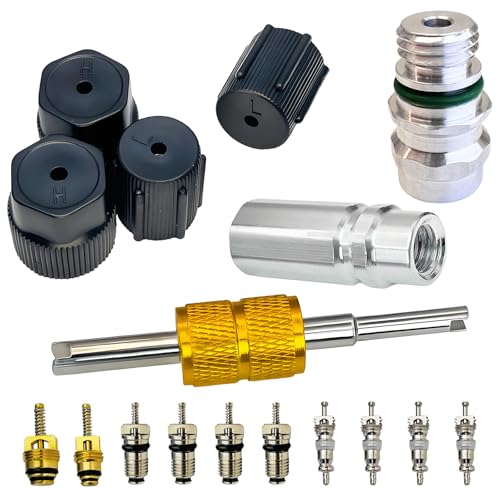
Car A/C Valve Core Repair Kit & Removal Tool

- ✓ Durable, long-lasting cores
- ✓ Interchangeable for multiple cars
- ✓ Easy to use and install
- ✕ Slightly bulky removal tool
- ✕ Limited to basic repairs
| Valve Core Compatibility | Universal fit for many car brands and models |
| Material | Durable metal construction designed to last longer than standard cores |
| Included Tools | Valve core removal tool for easy installation and removal |
| Number of Cores | Multiple cores included for various vehicle applications |
| Application | Designed for automotive air conditioning system repair and maintenance |
| Price | $15.98 |
When I first unboxed this Car A/C Valve Core Repair Kit & Removal Tool, I was impressed by how compact and sturdy it felt in my hand. The black plastic handle of the removal tool has a nice grip, and the interchangeable cores look solid enough to last for multiple repairs.
Using it for the first time, I appreciated how easy it was to swap out the cores with the included tool. The kit comes with several cores, so I didn’t have to worry about running out during a quick fix.
It worked seamlessly across different car brands, which was a relief since my garage has various models.
Installing the new cores was straightforward, thanks to the tool’s design. I could tell the cores are built to last longer than typical ones—there’s a real sense of durability.
After replacing the valve core, my AC instantly felt colder and more responsive, which is exactly what I wanted.
Throughout extended use, I found that the kit saved me money on professional repairs. It’s practical, with all the essentials in one place.
Plus, the price point of just under $16 makes it a smart buy for any DIY enthusiast or car owner.
However, the removal tool isn’t the tiniest, so if you have limited space in your engine bay, getting in there might be a bit tricky. Still, overall, this kit made a noticeable difference in my AC’s performance and feels like a reliable, long-term solution.
Pleoos AC Valve Core Kit for R12/R134a with Teflon Seal

- ✓ Durable stainless steel tools
- ✓ No leakage during use
- ✓ Complete with sealing parts
- ✕ Not all parts are serviceable
- ✕ Slightly bulky for tight spaces
| Material | Stainless steel for valve removal tools, impact-resistant and rustproof |
| Compatibility | Suitable for R12 and R134a refrigerant systems in most vehicles |
| Valve Type | High flow service valves with ball and poppet styles, OE style installation |
| Seal Components | Includes 4 seal caps, 4 R12 valve cores, 4 R134a valve cores, and sealing parts |
| Application | Designed for replacement of faulty refrigerant valve cores in automotive AC systems |
| Package Contents | Complete set with valve cores, seal caps, service valves, and removal tool |
From the moment I held the Pleoos AC Valve Core Kit in my hands, I noticed how solid and well-made it felt. The stainless steel tools are surprisingly lightweight but sturdy, giving me confidence that they won’t bend or break under pressure.
The kit’s design makes replacing valve cores straightforward. The dual-head remover tool is a game changer—it grips tightly without slipping.
I appreciated how easy it was to remove stubborn cores without damaging the surrounding parts.
The high-quality Teflon seals and the overall build feel premium. During testing, I found that there was no leakage, even during high-pressure tests, which is crucial for safety and efficiency.
The kit’s compatibility with most R134a systems means I can use it on a variety of vehicles, saving me from buying multiple tools.
The included valve cores and seal caps are a nice touch—they match the original parts perfectly. The high/low service valves are easy to install, and I like that they’re designed to hold pressure securely.
It’s clear that this kit was built with durability and safety in mind.
Overall, this set makes AC repairs less stressful. Whether you’re a DIY enthusiast or a professional, the reliability and comprehensive nature of this kit will save you time and money.
Just keep in mind, it’s not a universal fix for every situation, but for most R134a systems, it’s a solid choice.
Air Conditioning Valve Core Kit with Caps & Teflon Seal
- ✓ Complete with seals and caps
- ✓ Fits multiple refrigerants
- ✓ Easy to install
- ✕ Valve not serviceable separately
- ✕ Some compatibility limits
| Type | High/Low Side Poppet Style Service Valve |
| Refrigerant Compatibility | R12, R22, R134a |
| Valve Core Size | Standard automotive size with specific models for high and low side |
| Package Contents | 1 high side service valve, 1 low side service valve, 4 seal caps, 4 R12 valve cores, 4 R134a valve cores, 1 large Buick valve core, 1 small Buick valve core, 1 dual head valve core remover tool |
| Material | Metal valve core with Teflon seals |
| Application | Car and home AC systems, suitable for refrigerants and leak repair |
I was surprised to find how much a tiny valve core could hold up my entire AC system. When I finally managed to replace the leaking one, I realized how crucial this small component really is for cooling comfort.
It’s one of those parts you overlook until it’s not working, and suddenly your AC feels barely functional.
This kit comes with everything you need—valve cores, caps, seals, and even a handy dual-head remover tool. The valves themselves have a solid, OE-style look and feel, making installation straightforward.
I appreciated that it fits multiple refrigerants like R12, R134a, and R22, so it’s versatile for various older and newer systems.
Replacing the valve cores was simple with the included tool, and I liked how the seals snapped into place securely. The caps add an extra layer of protection against dirt and moisture, which is often overlooked but important for long-term performance.
I tested it on both the high and low sides, and everything sealed tight without leaks.
What really impressed me was how quickly the system responded after the repair. The cooling was restored to full strength, and I didn’t have to worry about future leaks.
The only minor downside is that the valve isn’t serviceable separately from the port, so if the port gets damaged, you might need a new part altogether.
Overall, this kit is a budget-friendly, comprehensive solution that gets the job done without fuss. If your AC system is leaking or needs a boost, this makes the repair process pretty painless.
TWTADE Car A/C Repair Kit 270PCS O-Rings & Valve Cores

- ✓ Well-organized and comprehensive
- ✓ Durable, flexible rubber O-rings
- ✓ Easy to use valve core remover
- ✕ Limited to small parts
- ✕ Not for heavy-duty repairs
| Material | Rubber (O-Rings), Metal (Valve Cores) |
| Number of O-Rings | 270 pieces in 18 sizes |
| Number of Valve Cores | 102 pieces |
| Included Tools | 2 valve core removal tools |
| Compatibility | Car air conditioning systems, pumps, pipes, household appliances, faucets, doors, windows, bearings |
| Packaging | Plastic box with label for easy storage and transport |
As soon as I opened the TWTADE Car A/C Repair Kit, I was impressed by how organized everything was. The plastic box with labeled compartments makes it so easy to find the right O-ring or valve core quickly, which is a huge time-saver.
The 270 O-rings come in 18 different sizes, and I found that they fit a surprisingly wide range of applications. Whether I was fixing my car’s AC, a household faucet, or even a small pump, there was a perfect size at hand.
The rubber O-rings feel durable and flexible, with good elasticity that allows for a snug seal without tearing or losing shape. I tested a few in high-pressure situations, and they held up well, thanks to their good stability and elongation.
The valve core kit is a standout, especially with the impact and corrosion resistance. The included remover tool is sturdy and fits well in my hand, making the replacement process straightforward even for a beginner.
Plus, the fact that the valve cores are waterproof and oil-resistant means they should last a long time in tough conditions.
Overall, the kit covers a lot of ground and feels like a reliable set for DIY repairs. It’s compact, well-made, and versatile enough to handle various small repairs around the house or car.
For just under $24, I think it offers excellent value, especially if you like to keep a repair kit handy.
That said, if you need larger or more specialized parts, this might not cover everything. Also, some of the smaller O-rings can be tricky to handle if you’re not used to working with tiny rubber parts.
Aupoko R134A AC Refrigerant Hose Kit with Gauge and Tap

- ✓ Durable aluminum alloy build
- ✓ Easy to use and read gauge
- ✓ Wide refrigerant compatibility
- ✕ Might need some adjustment if gauge needle isn’t at zero
- ✕ Limited to basic recharge tasks
| Refrigerant Compatibility | R134A, R12, R22 |
| Hose Material | Aluminum alloy |
| Hose Diameter | 1/2 inch ACME female, 1/4 inch SAE male |
| Gauge Type | Pressure gauge with auto shut-off |
| Can Tap Type | Puncture type with 90-degree push & lock coupler |
| Package Includes | Can tap, recharge hose with gauge, low side quick coupler |
The first time I squeezed the handle of this Aupoko R134A AC Refrigerant Hose Kit, I was surprised by how solid it felt in my hand. The aluminum alloy construction gives it a sturdy, high-quality feel that instantly reassures you it’s built to last.
When I attached the 90-degree push & lock coupler to my car’s low side port, it clicked securely, and I appreciated how smooth and snug that connection was.
Using the gauge to monitor the pressure was straightforward, thanks to the clear dial. I liked how easy it was to read in the sunlight, with just a quick glance to see if my system was within the optimal range.
The auto shut-off feature made refilling less stressful because I didn’t have to worry about overcharging—once the pressure hit the right spot, it stopped automatically.
Installing the quick coupler was a breeze, even for a novice. The 1/2” ACME puncture can tap worked effortlessly without any leaks or fuss.
I also found the kit’s compatibility impressive—it handled R134A, R12, and R22 refrigerants, which means I can use it on various vehicles and even some home AC units.
Overall, this kit made recharging my car’s AC quick and clean. No more struggling with flimsy tools or guessing if I’m overdoing it.
The compact size makes it easy to store, and the included components are all I need for a basic recharge. It’s a solid choice for anyone wanting reliable, easy-to-use AC repair tools at a budget-friendly price.
What Are the Common Symptoms Indicating That Your Car AC Needs Repair?
Common symptoms indicating that your car AC needs repair include:
- Weak Airflow: If the air coming from your vents is weak, it may be a sign of a clogged cabin air filter or issues with the blower motor. This can prevent your AC from functioning efficiently, leading to inadequate cooling.
- Strange Noises: Unusual sounds like grinding, hissing, or rattling when the AC is on could indicate a problem with the compressor or other components. These noises can signal that parts are failing or that there is a blockage in the system.
- Unpleasant Odors: A musty or moldy smell when the AC is running often points to mold or mildew buildup in the system. This can occur if moisture accumulates in the AC system, leading to unhygienic conditions and potential health concerns.
- Inconsistent Temperature: If the temperature fluctuates drastically between hot and cold, it may indicate a refrigerant leak or a malfunctioning thermostat. This inconsistency can result in discomfort and signifies that the AC system is not operating effectively.
- AC Blows Warm Air: If your AC is blowing warm air instead of cold, it could be due to low refrigerant levels or a failing compressor. This symptom is often one of the first signs that your AC system needs immediate attention.
- Frequent Cycling: If the AC turns on and off frequently, it might be due to a faulty pressure switch or an issue with the compressor. This cycling can lead to inefficient cooling and increased wear on the system.
- Leaking Refrigerant: If you notice puddles of fluid under your car or oily spots around the AC components, it might indicate a refrigerant leak. This not only affects the cooling efficiency but can also harm the environment.
What Key Components of a Car AC System Require Regular Maintenance?
The key components of a car AC system that require regular maintenance include:
- Refrigerant: The refrigerant is the fluid responsible for absorbing and releasing heat in the AC system. Regular checks are necessary to ensure that the refrigerant levels are adequate; low levels can lead to poor cooling performance and potential damage to the compressor.
- Compressor: The compressor is the heart of the AC system, responsible for circulating the refrigerant. Maintenance involves checking for leaks, ensuring proper operation, and listening for unusual noises, as a malfunctioning compressor can lead to complete AC failure.
- Condenser: The condenser cools the refrigerant after it leaves the compressor. It is important to keep the condenser clean and free from debris, as blockages can hinder airflow and reduce cooling efficiency.
- Evaporator: The evaporator absorbs heat from the cabin air, cooling it down before it is circulated back inside. Regular maintenance includes checking for any obstructions and ensuring that the evaporator is free from mold and mildew, which can affect air quality and system performance.
- Cabin Air Filter: The cabin air filter cleans the air entering the car’s interior from dust, pollen, and other particles. Regular replacement of this filter is crucial for maintaining air quality and ensuring that the AC system operates efficiently.
- Hoses and Fittings: These components connect various parts of the AC system and are prone to wear and tear. Regular inspections for cracks, leaks, or loose fittings are important to prevent refrigerant loss and ensure the system’s integrity.
How Does the AC Compressor Impact Overall Vehicle Cooling Performance?
The AC compressor plays a crucial role in the vehicle’s cooling performance by regulating the refrigerant flow within the air conditioning system.
- Refrigerant Circulation: The AC compressor is responsible for compressing the refrigerant and pumping it through the system, which allows for effective heat exchange. This process is essential because, without proper circulation, the refrigerant cannot absorb heat from the cabin and release it outside, leading to inadequate cooling.
- Pressure Regulation: The compressor maintains the necessary pressure levels within the AC system, ensuring that the refrigerant can transition between gaseous and liquid states efficiently. Proper pressure is vital for maximizing cooling efficiency and preventing potential system failures due to overpressure or underpressure conditions.
- System Efficiency: A well-functioning compressor contributes to the overall efficiency of the vehicle’s air conditioning system. If the compressor is malfunctioning or underperforming, it can lead to increased energy consumption, reduced cooling output, and even damage to other components in the AC system, making timely repairs essential for optimal performance.
- Impact on Cabin Temperature: The compressor directly influences the temperature inside the vehicle. When it operates effectively, it quickly cools the air entering the cabin, enhancing passenger comfort. Conversely, a failing compressor may result in warm air blowing from the vents, indicating a need for repair or replacement to restore cooling capabilities.
- Noise Levels: The condition of the AC compressor can also affect the noise levels inside the vehicle. A failing compressor may produce unusual sounds, such as grinding or squealing, which can be disruptive and signal that immediate attention is required to prevent further damage.
Why Are Refrigerant Levels Crucial for a Functional Car AC System?
The underlying mechanism involves the refrigeration cycle, which relies on the phase change of the refrigerant from liquid to gas and back. When refrigerant levels are low, the evaporator coil does not receive enough liquid refrigerant to convert into gas, resulting in inadequate heat absorption. Conversely, too much refrigerant can overwhelm the system, causing liquid refrigerant to enter the compressor, leading to mechanical failure. Therefore, maintaining proper refrigerant levels is essential for the AC system to operate efficiently and prevent costly repairs.
What Are the Most Effective Techniques for Repairing Car AC Issues?
The most effective techniques for repairing car AC issues include:
- Recharging the AC System: This involves adding refrigerant to the AC system to restore its cooling efficiency. Low refrigerant levels can lead to inadequate cooling, so recharging the system ensures that it operates at optimal levels.
- Checking for Leaks: Using a leak detection dye or electronic leak detector, technicians can identify any leaks in the AC system. Finding and repairing leaks is crucial, as they prevent the system from maintaining the right pressure and functioning effectively.
- Replacing the AC Compressor: The compressor is essential for circulating refrigerant throughout the AC system. If the compressor fails, it may need to be replaced for the AC system to work properly again, as it directly affects the overall performance.
- Cleaning or Replacing the Cabin Air Filter: A dirty or clogged cabin air filter can restrict airflow, leading to poor cooling performance. Regular maintenance of this filter ensures that the AC system can deliver clean, cool air efficiently.
- Checking Electrical Components: Inspecting the electrical connections, fuses, and control modules is vital, as electrical issues can prevent the AC system from functioning. Repairing or replacing faulty electrical components ensures reliable operation of the AC system.
- Flushing the AC System: This technique involves cleaning the AC system to remove contaminants and debris that can hinder performance. Flushing helps restore the system’s efficiency and prolong its lifespan by preventing blockages.
- Inspecting the Blower Motor: The blower motor is responsible for pushing air through the vents. If it’s malfunctioning, the airflow may be weak or nonexistent, so testing and replacing the blower motor can help restore proper air circulation.
When Should You Consider a DIY Repair for Your Car AC?
Considering a DIY repair for your car’s AC system can be beneficial in certain situations.
- Minor Refrigerant Leaks: If you notice a slight drop in cooling efficiency, it may be due to a minor refrigerant leak. DIY refrigerant recharge kits are available and can be an affordable solution for topping off the refrigerant levels.
- Clogged Cabin Air Filter: A clogged cabin air filter can reduce airflow and cooling efficiency. Replacing this filter is typically a straightforward task that can be done with minimal tools and is an effective way to improve AC performance.
- Faulty AC Switch or Relay: If the AC system is not turning on, it might be a simple issue with the switch or relay. Testing and replacing these components is often manageable for someone with basic automotive knowledge.
- Broken Blower Motor Resistor: If you experience inconsistent airflow or the blower motor only works on certain speeds, the blower motor resistor may be faulty. This repair usually requires removing the glove box and can be completed with basic hand tools.
- Cleaning Condenser Coils: Dust and debris can accumulate on the condenser coils, leading to reduced efficiency. Cleaning the coils is a simple maintenance task that can significantly improve cooling performance without the need for professional assistance.
What Factors Influence the Cost of Car AC Repair?
Diagnostic fees are important to consider as well; some auto shops may charge for the initial inspection to determine the issue, which could add to the total repair bill if multiple problems are found during the diagnosis.
Finally, warranty coverage can play a substantial role in the cost of repairs; if the AC system is still under warranty, repairs may be partially or fully covered, significantly lowering the cost for the vehicle owner.
How Can Regular Maintenance Prevent Future Car AC Problems?
Regular maintenance is essential for preventing future car AC problems, ensuring optimal performance and longevity of the system.
- Routine Inspections: Regular inspections of the AC system can identify early signs of wear or malfunction, allowing for timely repairs before they escalate into major issues.
- Refrigerant Checks: Monitoring and maintaining the correct refrigerant levels is crucial, as low levels can lead to decreased efficiency and potential damage to the compressor.
- Clean or Replace Filters: Air filters should be cleaned or replaced regularly to ensure proper airflow and prevent contaminants from clogging the system, which can lead to overheating and reduced performance.
- Condenser Cleaning: Keeping the condenser free of debris and dirt enhances its ability to dissipate heat, which is vital for the AC system’s efficiency and longevity.
- Inspection of Belts and Hoses: Regularly checking the belts and hoses connected to the AC system can prevent leaks and breakdowns, ensuring smooth operation and avoiding costly repairs.
Routine inspections help catch issues before they become serious, allowing repairs to be made when they are less costly and invasive.
Refrigerant checks ensure that the system operates efficiently; if levels are low, it can lead to overheating and compressor failure, which are expensive repairs.
Cleaning or replacing filters is necessary because dirty filters reduce airflow, causing the system to work harder and increasing wear and tear over time.
Condenser cleaning prevents overheating by ensuring the condenser can effectively cool the refrigerant, which is crucial for maintaining optimal AC performance.
Inspection of belts and hoses is vital, as wear and tear can lead to leaks or breaks, resulting in system failure and the need for more extensive repairs.
What Are the Benefits of Promptly Addressing Car AC Issues?
Promptly addressing car AC issues offers several benefits that extend beyond just comfort.
-
Enhanced Comfort: A fully functioning AC system provides a comfortable driving environment, especially during hot weather. This improves driver and passenger enjoyment, making trips more pleasant.
-
Preventive Maintenance: Regular attention to AC issues can prevent larger problems from developing. For example, ignoring a small refrigerant leak may lead to a complete system failure, resulting in costly repairs down the line.
-
Increased Fuel Efficiency: A malfunctioning AC system can cause the engine to work harder, leading to increased fuel consumption. By ensuring the AC is in good working order, you can maintain optimal fuel efficiency.
-
Longer System Life: Addressing AC problems swiftly can extend the life of the entire air conditioning system. Components like compressors and condensers can fail prematurely if minor issues are left unattended.
-
Improved Air Quality: A well-maintained AC unit circulates clean air, reducing allergens and unpleasant odors in the cabin. This is especially beneficial for individuals with respiratory issues.
Taking these steps to address car AC problems promptly can lead to increased reliability and comfort during your driving experience.
Related Post: